Moving Out Checklist: Everything You Need When Moving Out of Home for the First Time (2026 Guide)

Leaving home for the first time is a big deal, and it's completely normal to feel like there's a hundred things to figure out at once. Between finding a place, working out what to buy, and remembering to actually redirect your mail, it can feel like nobody hands you the instructions. This moving out checklist is the one we wish someone had handed us built specifically for first-timers moving out in Brisbane, room by room and week by week, so nothing catches you off guard. (And no, you don't need a twelve-piece dinner set on day one. We promise.)
Quick answer: what you actually need on your moving out checklist
If you only read one section, read this one. Here's the short version:
- 3 months out: set a budget, start looking for a place, understand what a bond actually covers.
- 2 months out: start buying furniture and kitchen essentials, don't leave it all until the last week.
- 2 weeks out: redirect your mail, set up utilities, update your address everywhere that matters.
- Moving week: confirm your moving day plan, pack a first-night bag, do a final walkthrough of your old room.
- Don't forget: ID and Medicare updates, renters insurance, and a proper bond inspection report with photos.
Everything below covers each of these in real detail.
3 months before: planning your move out of home
Budgeting for your first move
Before anything else, work out what this actually costs. In Queensland, a rental bond can't legally exceed four weeks' rent, no matter how high the weekly rent is plus your first two to four weeks upfront, so if you're renting a $450/week share room, budget around $2,250–$2,700 just to get the keys, before you've bought a single thing.
On top of that, if you're moving into an unfurnished place, budget $800–$1,300 for starter furniture and kitchen essentials if you're buying new from places like Kmart, IKEA, or Target or closer to $400–$700 if you buy the bigger furniture pieces secondhand (Facebook Marketplace and Gumtree are full of decent couches, desks, and drawers for under $100 in Brisbane) and only buy your mattress new. More on exactly what that covers below.
Finding a place to rent
Start looking on Domain and realestate.com.au around three months out Brisbane's rental market moves fast, so apply as soon as you find somewhere that fits. If this is genuinely your first lease, ask whoever's helping you (a parent, a guarantor, an older sibling) to look over the lease with you before you sign it's normal to need a second set of eyes the first time, and nobody's judging you for not knowing what a "quiet enjoyment" clause means yet.
What to buy when moving out
This is the part most moving out for the first time guides skip past too quickly, or worse, they just tell you to "furnish your new place" and leave you googling at 11pm. Here's what you actually need, split by priority and don't panic if you're not ticking every box before moving day. Most of this can be filled in over your first month.
.webp)
Furniture and appliance essentials
- Mattress and bed frame (or honestly, just a mattress the frame can wait). Buy the mattress new if you buy nothing else. New secondhand mattresses carry real hygiene risks (dust mites, bed bugs) that surface cleaning can't fix, and a new budget single is only around $70–$100 anyway.
- A couch or a couple of armchairs secondhand is genuinely fine here, and Brisbane's Facebook Marketplace is full of decent options for $80–$250, sometimes free
- A small dining table or desk, and one or two chairs another good secondhand pick, usually $50–$150 used
- A wardrobe or set of drawers, unless the room already has built-ins often $20–$100 secondhand
- Basic lamps overhead lighting in rentals is almost always depressing
- A bookshelf or some kind of shelving, even a cheap flat-pack one
- Curtains or blinds if the windows don't already have them
Kitchen starter items
- A saucepan, a frying pan, and a chopping board
- A basic knife set three decent knives beat twelve blunt ones
- Plates, bowls, mugs, and cutlery for at least two people
- A kettle and a toaster
- A microwave, if the place doesn't already have one
- Tea towels, dish soap, and a drying rack
- Food storage containers leftovers deserve better than the fridge shelf, uncovered
- A rubbish bin and bin liners (this one gets forgotten constantly)
- Oven mitts, if your stove has an actual oven and not just a hotplate
Op shops, Facebook Marketplace, and Kmart cover almost everything on this list without blowing your budget.
The ultimate moving out list: room-by-room breakdown
Here's the full moving out list, broken down room by room so nothing gets forgotten in the shuffle. Some of these will feel obvious once you're standing in the empty room, the rest are the things you only remember at 9pm when the shops are shut.
Kitchen: cookware, cutlery, plates and bowls, mugs and cups, tea towels, dish sponge and brush, dishwashing liquid, bin and bin liners, food storage containers, chopping board, can opener, measuring cups, cling wrap and foil.
Bathroom: shower curtain and hooks (if needed), bath mat, towels (bath and hand), toilet brush, toilet paper more than you think you need toiletries, a small first-aid kit, a laundry hamper.
Bedroom: bedding (sheets, doona, pillows), a lamp, curtains or blinds if not supplied, hangers, somewhere to put your clothes even if it's not a proper wardrobe yet, an alarm clock if your phone doesn't cut it.
Living room: couch or seating, a rug if the floors are bare, basic lighting, an extension cord (rentals never have enough power points), a TV if you're bringing one, some kind of coffee table, even a cheap one.
Laundry: laundry detergent, an airer or drying rack if there's no dryer, a laundry basket, pegs.
Miscellaneous, but genuinely useful: a basic toolkit, spare light bulbs, batteries, painkillers, a torch, duct tape, an umbrella, a step stool, sewing kit for the inevitable button emergency.
Print this moving list out or save it on your phone. It's the fastest way to check what's actually in your bags versus what's still sitting on a shelf at home.
Your moving checklist timeline: 2 weeks out
This is where the admin actually happens. A proper moving checklist timeline in the final fortnight looks like this:
- 7 days out: update your address with your bank, Medicare, and your license/ID most of this is one pass through myGov.
- Moving day: do a final walkthrough of your old room, take photos of anything you're leaving behind, and hand back keys if required.
- 3 days out: confirm your moving day plan whether that's a mate with a ute or a professional removalist and pack a first-night bag (phone charger, medication, a change of clothes, toiletries).
- 14 days out: redirect your mail via Australia Post's mail redirection service, and give notice to your current utility providers if applicable.
- 10 days out: set up electricity, internet, and water in your name for the new place Energex or Origin can usually connect you within a few business days if you're not leaving it to the last minute.
Following a moving checklist like this in order is what actually prevents the "oh no, I forgot to..." moment at 9pm on moving day.
What first-timers always forget
Even with a solid plan, a few things slip through almost every time the parts a basic moving out of home checklist often misses because they're not exciting enough to make the list:
Renters insurance. It's cheap, often $10–$20/month and covers your stuff if something goes wrong. Most first-timers skip it entirely, right up until they need it.
A bond inspection report with photos. Take dated photos of every room, including anything already damaged, the day you move in the RTA's entry condition report guidance explains exactly what's expected here. It's the single best protection for getting your bond back later.
Spare keys. Cut one before you need it, not after you've locked yourself out at midnight.
A basic toolkit. A screwdriver and a hammer solve more first-week problems than you'd expect: flat-pack furniture, loose hinges, hanging a mirror.
Reading the actual lease, not just skimming the bits your agent highlighted.
Documents & admin you can't skip
This is the least exciting part of any checklist for moving house, but it's the part that actually matters most when something goes wrong later. Beyond the physical stuff, this part of your moving house list is easy to underestimate it's boring, but it's the kind of boring that comes back to bite you if you skip it:
- Photo ID and driver's license address update
- Medicare address update
- Bank and superannuation address update
- Electoral roll update
- Vehicle registration transfer, if applicable
- Copies of your signed lease and bond lodgement receipt, kept somewhere safe
Most of these can be knocked out in a single sitting through myGov and take less time than people expect. It's the remembering to do it, not the doing it, that trips people up. Keep this moving house list somewhere you'll actually check, not buried in a notes app you opened once and never again.
Utilities, insurance and address updates you can't skip
Between working through a checklist for moving house and actually getting the physical stuff done, the utilities side is the one that trips people up most, mostly because of timing rather than difficulty:
- Connect electricity (Energex network, provider of your choice Origin, AGL, etc.)
- Connect internet/NBN book this early, connection slots can take 1–2 weeks
- Set up renters insurance before moving day, not after
- Confirm water is included in rent or needs separate connection (varies by property)
- Update your address for any subscriptions, deliveries, or memberships
Get this part sorted before you're standing in an empty apartment with no wifi and a phone on 4%.
Moving out for the first time? Common mistakes to avoid
A few mistakes come up again and again for first-timers:
- Underestimating the upfront cost. Bond plus rent in advance plus furniture adds up fast budget for it properly rather than hoping it works out.
- Buying too much furniture too early, before you know how the space actually works. Start with essentials, add the rest once you've lived there a few weeks.
- Not reading the lease properly. Ask questions before you sign, not after something goes wrong.
Forgetting bond and utility connection lead times. Both can take longer than expected to start the process a week or two earlier than feels necessary.
Living with roommates for the first time
If you're moving into a shared house rather than solo, this bit matters just as much as the checklist itself. Living with people who aren't your family takes some adjusting, and a few ground rules early on save a lot of passive-aggressive sticky notes later.

- Talk about expectations before you move in, not after something goes wrong. Cleaning schedules, guests staying over, quiet hours awkward to bring up early, much worse to bring up after three weeks of resentment.
- Work out how bills get split and paid, and pick a system on day one. A shared expense app beats "I'll get you back" every time.
- Respect different schedules. Not everyone works 9-to-5, and a housemate on night shift deserves the same consideration you'd want.
- You don't have to be best friends. It's genuinely fine to be friendly housemates rather than inseparable ones. Regular alone time keeps things healthier, not colder.
- Take turns with shared spaces. Nobody wants to fight for kitchen bench space every night at 6pm.
- Skip the passive-aggressive notes. If something's bothering you, say it directly and kindly. It's awkward for about thirty seconds and saves you months of tension.
Brisbane-specific tips for moving out of home
A few things that are specific to moving out for the first time in Brisbane rather than anywhere else:
- Ceiling fans and air conditioning matter more here than people expect. If a rental doesn't have air con, budget for a portable unit before your first Brisbane summer you'll thank yourself in February.
- Go Card or a contactless card gets you around cheaply. Queensland's flat 50-cent Translink fare makes getting around without a car genuinely affordable if you're near a bus or train line.
- Share houses are common and often the most affordable entry point into areas like West End, Fortitude Valley, or Toowong if you're studying or starting your first job.
- Ask about stairs and stumps if you're moving into an older Queenslander furniture that fit in your old room might not clear a narrow staircase.
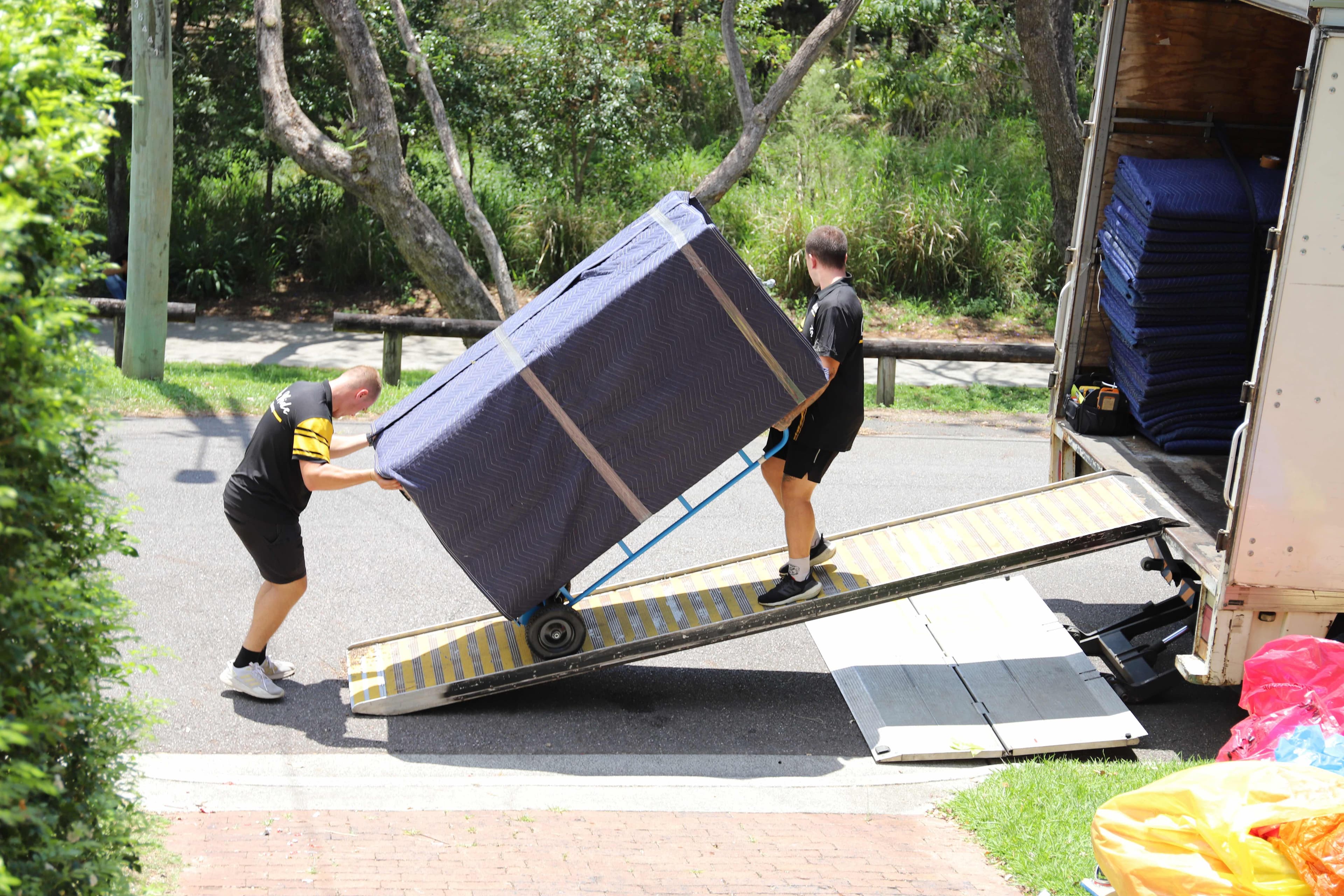
If the physical move itself feels like the hardest part, our Brisbane removalists team handles exactly this kind of first-move smaller loads, share houses, tight budgets and can give you a free, obligation-free quote so you know the cost upfront.
Frequently asked questions
Q1. What do you need when you move out?
At minimum, a moving out checklist should cover: a bed, basic kitchen items, bedding and towels, and the admin sorted address updates, utilities connected, and renters insurance. Everything else can be added over your first few weeks.
Q2. How much does it cost to move out for the first time?
Budget roughly $2,250–$2,700 for bond and rent in advance on an average share room, plus $800–$1,300 for starter furniture and kitchen essentials if you're buying new (Kmart, IKEA, Target), or $400–$700 if you buy the bigger furniture pieces secondhand and only buy your mattress new.
Q3. What's the best age to move out of home?
There's no single right age it depends on finances, study or work commitments, and personal readiness far more than age itself. What matters more is having a realistic budget and a plan before you sign a lease.
Q4. Do I really need a moving out checklist?
If it's your first time, yes it's the difference between a smooth move and realising two weeks in that nobody redirected your mail or set up your internet. A good moving out checklist turns a stressful unknown into a list of things you just work through, one at a time.
Final thoughts
Your first move out of home is one of those things that feels overwhelming right up until you actually start ticking things off and it turns out most of it is genuinely manageable with the right list in front of you. Use this moving out checklist as your starting point, adjust it to your own situation, and don't be afraid to ask for help with the parts that feel like too much. Oh, and call your parents once you're settled in they'll want to know you haven't burnt the kitchen down yet.
Need a hand with the physical move? Get a free, obligation-free quote from Ozwide Movers and we'll take that part off your plate.

Related Articles
More from our blog
Tips to make your move stress-free.